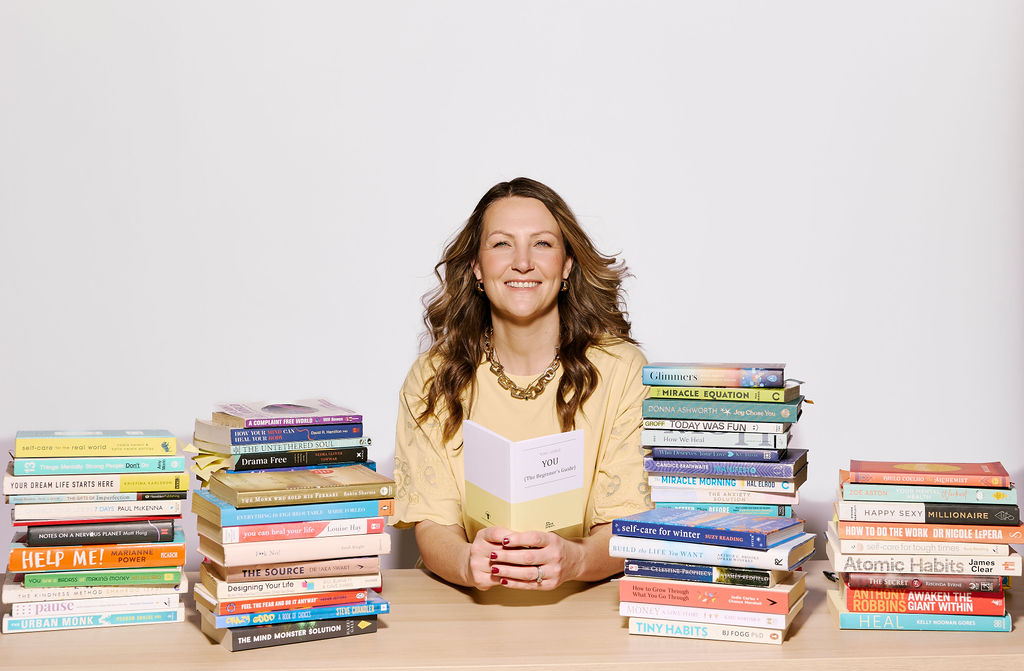
I discovered self-help from a place of crisis.
Ten years ago I was burnt out, depressed, and addicted to booze, stress and other people's approval. My 15-year journalism career was teetering, my marriage was about to implode, I was lost and lonely and the big '40' was looming.
I picked up Paul McKenna's book, "Change Your Life in 7 Days," and everything changed.
OK, I didn't change my life in seven days, exactly (it took me a year to read that book!) but in the decade that followed I read over 1,000 self-help books, founded the world's first dedicated self-help book club, interviewed hundreds of bestselling authors and wellbeing experts, and built a global community reaching over 25,000 people who believe, as I do, that the right book at the right time can change your life.
Now I've written my own book. And the most important thing I want you to know about it is this: it's not here to fix you.
The problem with "fixing yourself"
We've absorbed the idea; from hustle culture, wellness marketing, and the shinier end of the self-help shelf, that we are broken things in need of repair. That if we just optimise enough, journal enough, meditate enough, we'll finally arrive somewhere called Better.
But that's not what a decade of being immersed in this stuff has taught me. What it's taught me is that self-help is about getting to know yourself, and then designing a life that fits.
And getting to know yourself starts with three questions:
1. What has shaped you?
2. Who are you becoming?
3. What do you need right now?
These are the three steps of my Connected Self Method, and they're the beating heart of my book. They're also, I'd argue, the questions that most of us have never properly sat with. We're too busy keeping up with life to take a breath and actually think about what we want from it.
The noisier the world gets, the more we need to go inward
Overwhelm, anxiety, burnout, the paradox of being hyperconnected while feeling utterly disconnected, these aren't niche experiences anymore. They're the water we're all swimming in.
And yet rest is still treated as weakness and slowing down still feels like falling behind.
What I've come to understand, and what the books have shown me, repeatedly, is that the relationship you have with yourself is the most important one you will ever have. And working on that requires a little bit of slowing down. Asking ourselves these questions and getting quiet enough to listen to the answers.
A beginner's guide, for anyone who needs one
You (The Beginner's Guide) isn't about adding more to your plate. It's about understanding what's already on it.
I hope people finish this book with a better understanding of their relationship with themselves, a desire to make it as good as possible, and some tools to start doing that.
And if you close the last page feeling curious instead of critical, then it's done its job.
___
You (The Beginner's Guide) is published by The Pound Project and only available until May 26th.
Get your copy: https://www.poundproject.co.uk/you
I discovered self-help from a place of crisis.
Ten years ago I was burnt out, depressed, and addicted to booze, stress and other people's approval. My 15-year journalism career was teetering, my marriage was about to implode, I was lost and lonely and the big '40' was looming.
I picked up Paul McKenna's book, "Change Your Life in 7 Days," and everything changed.
OK, I didn't change my life in seven days, exactly (it took me a year to read that book!) but in the decade that followed I read over 1,000 self-help books, founded the world's first dedicated self-help book club, interviewed hundreds of bestselling authors and wellbeing experts, and built a global community reaching over 25,000 people who believe, as I do, that the right book at the right time can change your life.
Now I've written my own book. And the most important thing I want you to know about it is this: it's not here to fix you.
The problem with "fixing yourself"
We've absorbed the idea; from hustle culture, wellness marketing, and the shinier end of the self-help shelf, that we are broken things in need of repair. That if we just optimise enough, journal enough, meditate enough, we'll finally arrive somewhere called Better.
But that's not what a decade of being immersed in this stuff has taught me. What it's taught me is that self-help is about getting to know yourself, and then designing a life that fits.
And getting to know yourself starts with three questions:
1. What has shaped you?
2. Who are you becoming?
3. What do you need right now?
These are the three steps of my Connected Self Method, and they're the beating heart of my book. They're also, I'd argue, the questions that most of us have never properly sat with. We're too busy keeping up with life to take a breath and actually think about what we want from it.
The noisier the world gets, the more we need to go inward
Overwhelm, anxiety, burnout, the paradox of being hyperconnected while feeling utterly disconnected, these aren't niche experiences anymore. They're the water we're all swimming in.
And yet rest is still treated as weakness and slowing down still feels like falling behind.
What I've come to understand, and what the books have shown me, repeatedly, is that the relationship you have with yourself is the most important one you will ever have. And working on that requires a little bit of slowing down. Asking ourselves these questions and getting quiet enough to listen to the answers.
A beginner's guide, for anyone who needs one
You (The Beginner's Guide) isn't about adding more to your plate. It's about understanding what's already on it.
I hope people finish this book with a better understanding of their relationship with themselves, a desire to make it as good as possible, and some tools to start doing that.
And if you close the last page feeling curious instead of critical, then it's done its job.
___
You (The Beginner's Guide) is published by The Pound Project and only available until May 26th.
Get your copy: https://www.poundproject.co.uk/you


